
Common CCTV Installation Mistakes to Avoid
Most businesses treat CCTV installation as a formality — mount a camera, plug it in, move on. That thinking is exactly why so many CCTV systems fail when it actually matters. Real security comes from every decision layered beneath the hardware: the placement, lighting, wiring, maintenance, and cybersecurity protocols protecting your footage.
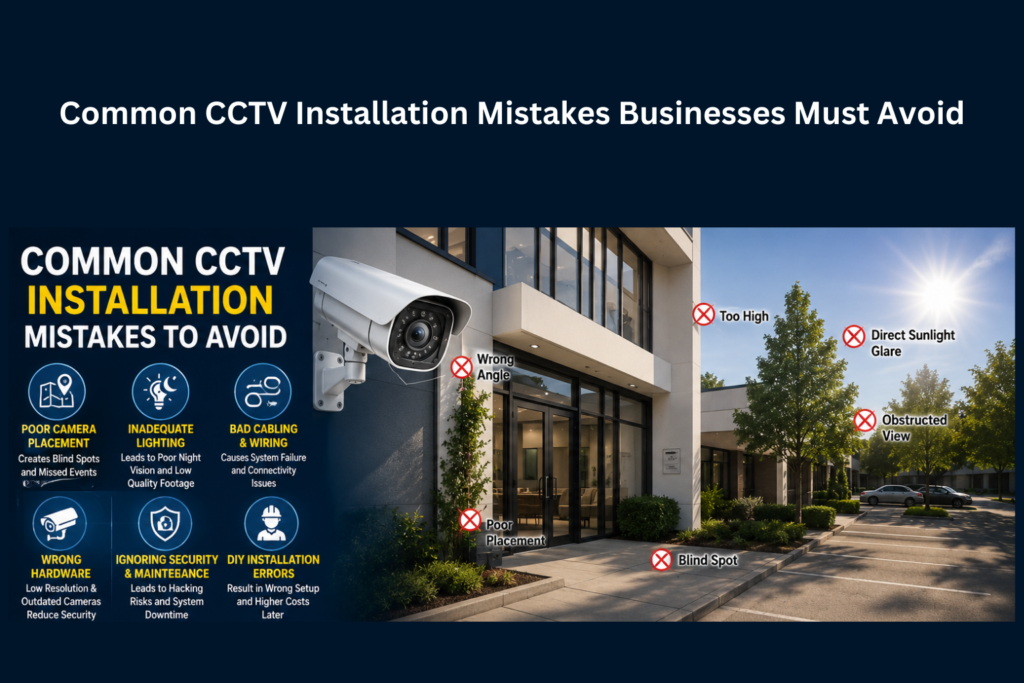
Poor CCTV Camera Placement Creates Dangerous Blind Spots
Poor camera placement remains one of the most common reasons video surveillance systems fail. Cameras pointed into sunlight, reflective surfaces, or mounted too high often produce unusable footage.
A proper site survey should map entry points, exits, corridors, parking lots, reception areas, and storage zones before installation begins. Positioning cameras at 8–10 feet typically provides the best balance between coverage and facial detail.
Businesses using commercial CCTV systems should consider PTZ and wide-angle cameras to reduce blind spots while maintaining strong coverage.
Seasonal changes like tree growth, signage installation, or relocated equipment can slowly create hidden coverage gaps. Routine inspections help maintain visibility.
Poor Lighting Can Ruin CCTV Footage Quality
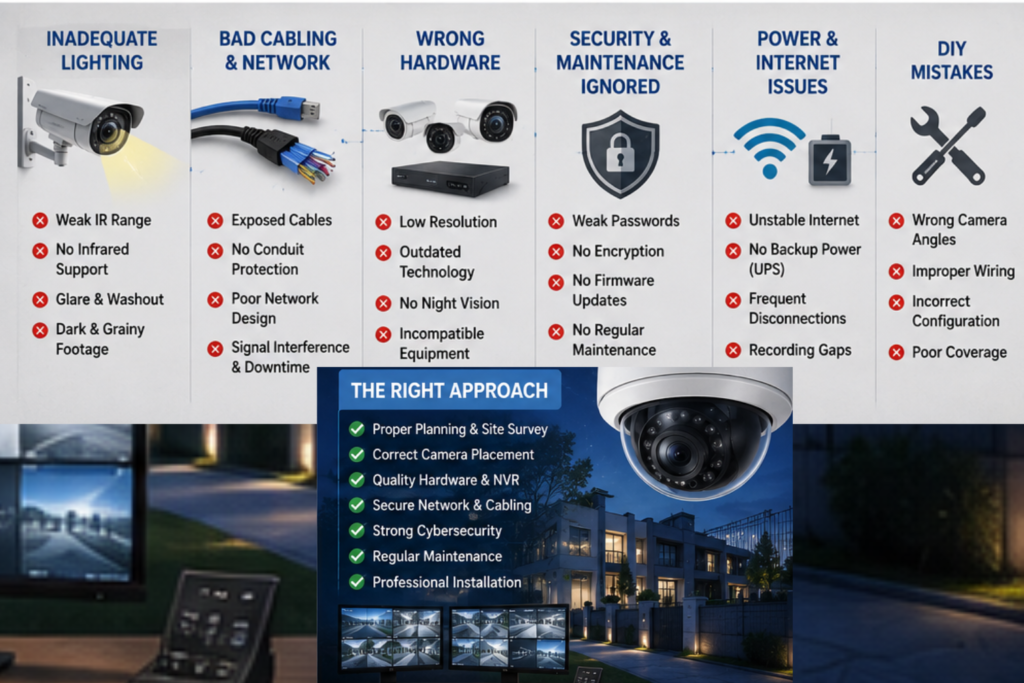
Even advanced cameras struggle in poorly lit environments. Weak lighting creates grainy footage, poor exposure, and unusable night recordings.
Infrared range must match the actual monitoring distance. Cameras monitoring parking lots, outdoor areas, and building perimeters require stronger IR performance than indoor hallway setups.
Motion-activated lights and supplemental illumination improve visibility without constant energy usage. Proper placement prevents glare and lens washout.
Modern 4K CCTV cameras with advanced night vision perform significantly better when paired with proper lighting design.
Bad Cabling and Wiring Lead to CCTV System Failure
Exposed wiring increases the risk of tampering, weather damage, and long-term failure. Professional CCTV installation should always include weatherproof conduit piping and protected cable routing.
Poor network infrastructure and faulty PoE switches frequently cause video lag, downtime, and connection instability in IP cameras.
Outdoor cable runs require protection against UV exposure, moisture, corrosion, and even rodent damage. Structured cabling prevents expensive repairs and footage loss later.
Choosing the Wrong CCTV Hardware Reduces Security
Low-resolution cameras cannot capture forensic-level detail needed for investigations or evidence. Businesses should use at least 1080p HD, while larger properties benefit from 4K surveillance systems.
Modern IP cameras with NVR systems support remote access, smart alerts, motion detection, and scalable security infrastructure.
Outdated analog setups limit performance and prevent integration with advanced AI surveillance solutions and access control systems.
Ignoring CCTV Cybersecurity and Maintenance Causes Long-Term Problems
Network-connected security systems require strong passwords, encryption, firewall protection, and multi-factor authentication to prevent unauthorized access.
Routine maintenance is equally important. Lens cleaning, firmware updates, storage checks, and quarterly inspections help maintain image quality and system reliability.
Businesses should also secure DVR and NVR hardware inside locked cabinets and use UPS backup systems to prevent recording failures during power interruptions.
Stable internet connectivity is essential for remote viewing and mobile monitoring.
DIY CCTV Installation Mistakes Cost More Later
DIY installations often create incorrect camera angles, weak wiring, and unstable configurations that fail during real incidents.
Working with a professional CCTV installer ensures proper placement, secure network configuration, optimized recording settings, and long-term reliability.
The cost of fixing installation mistakes almost always exceeds the savings from doing it incorrectly the first time.
FAQ Schema Suggestions
What are the most common CCTV installation mistakes?
Poor camera placement, weak lighting, bad cabling, outdated hardware, and ignoring cybersecurity are the most common CCTV installation mistakes.
Why is proper CCTV camera placement important?
Correct camera positioning reduces blind spots and improves facial recognition, coverage quality, and incident investigation.
Do CCTV cameras need regular maintenance?
Yes. CCTV systems require cleaning, firmware updates, storage checks, and inspections to maintain performance and security.
Can poor lighting affect CCTV footage?
Yes. Poor lighting creates grainy footage, weak night vision, and unusable recordings.
Is professional CCTV installation better than DIY?
Professional installation provides better camera positioning, network stability, security configuration, and long-term reliability.